
An offering: Intuitive art-based journaling
Hello to the East Bay Therapist Community. My name is Cristy Cash, AMFT. I have been fortunate to meet some of you through events hosted by EBTC creator, Nes Pinar, LMFT in her Lafayette Office where she mentors me as one of her associates.
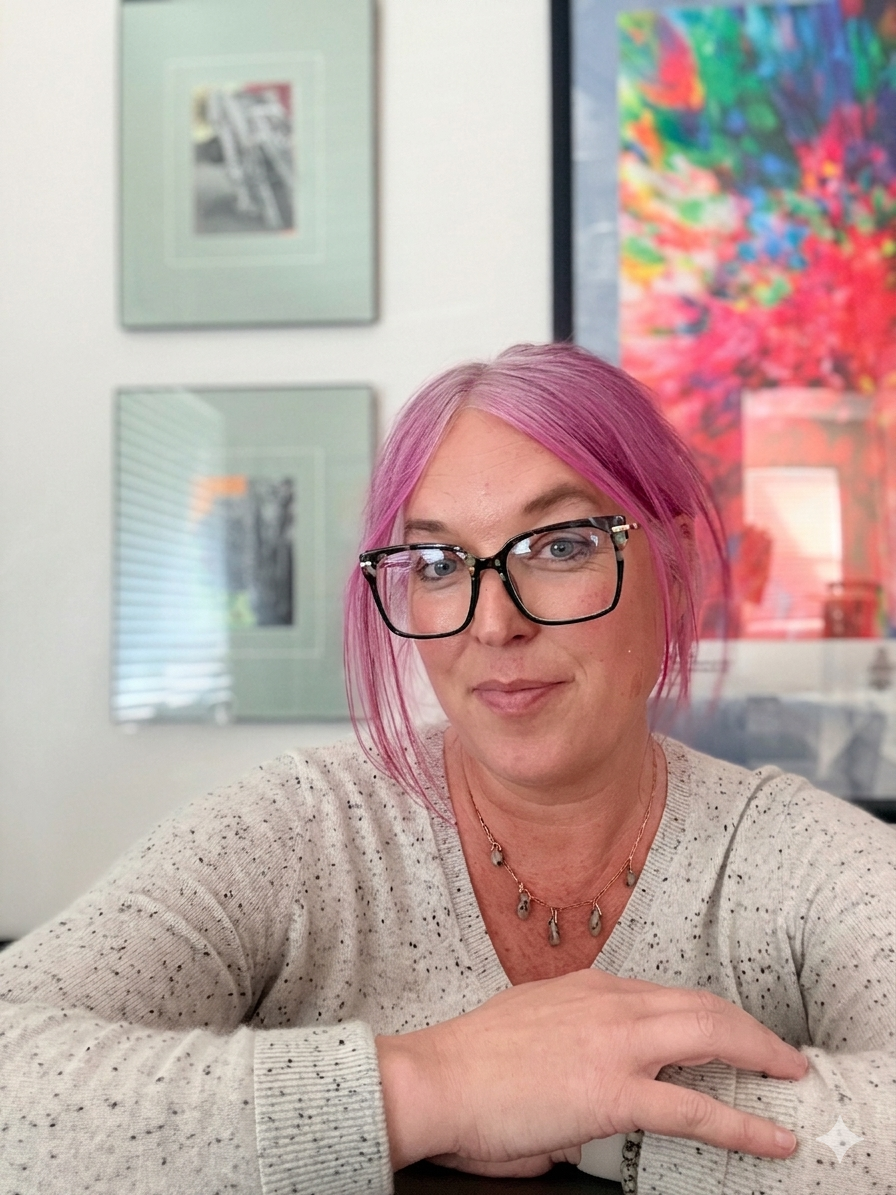
Post author: Cristy Cash, AMFT
I come to you today with an offering that you may find useful (and possibly relaxing): a combination arts-based process incorporating journaling and mark-making.
How to use it as a processing tool for self (and clients):
During my graduate and post graduate training in the expressive arts department at the California Institute of Integral Studies in San Francisco, time and again professors and mentors from the field spoke of therapist burnout. Lacking the lived experience in this field, I furrowed my brow and filed it away for the future. During our education, we were trained constantly in arts-based processing throughout our academic work, regardless of the nature of the work, specifically as treatment for future clients and for prevention of burnout in ourselves. When I entered a pre-graduate internship and later began as a pre-licensed associate, I witnessed expressions from other therapists alluding to their own brushes with burnout and exhaustion. Maybe, I thought, this emphasis on arts processing I had received during my program was a gift I should continue to access.
Recently, I participated in a workshop hosted by Nes Pinar, LMFT on (im) perfect therapists in which I and other therapists gathered and processed our own histories and expressions of perfectionism. I heard us each grapple with our own lived definitions of perfectionism and our collective response to stories of the unspoken therapist requirement to “hold it all together.” If you weren’t able to attend the workshop, the two-part blog post is available here. As a response to the work Nes Pinar led us through that day, I decided to document a process I return to from time to time.
Below is a video demonstrating how I use layers of underwriting with tempera paint sticks to create a journaling and mark making experience.
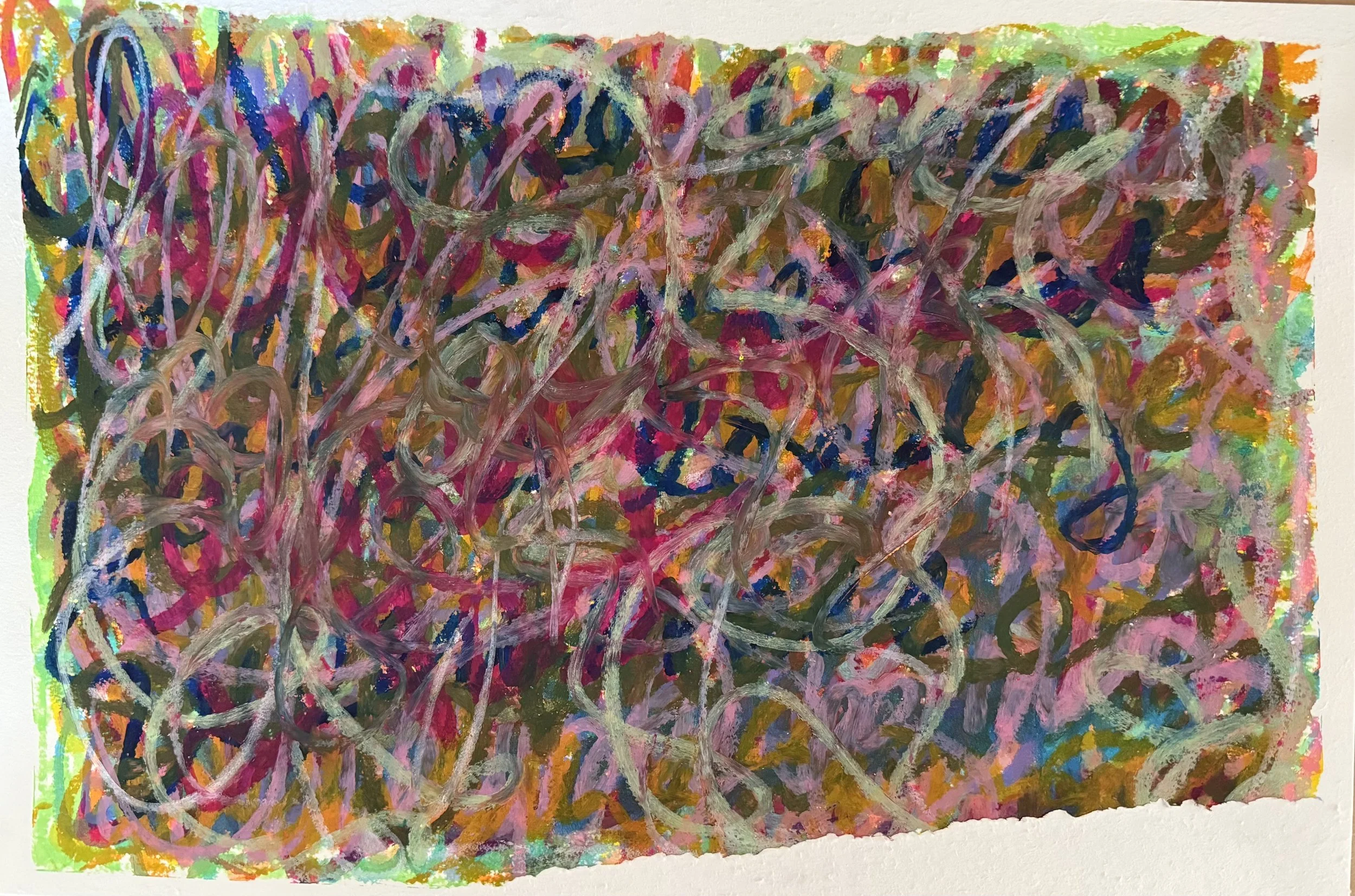
Finished example. Starting from an empty page, words are written over and over until the page is filled with color.
How to use the video:
You can use this video to get an idea of how I do this work in case you find something in yourself that may want to participate.
This video is full length! If it helps, I can be your “body double.” You can put on some music and brew a cup of tea and we can do this work together.
Recovering perfectionists who need a contained space to disobey every rule can practice that here! The stakes are low and the benefits may be surprising.
For clients: While this community blog is meant as a supportive space for therapists, you may have clients who appreciate the video. Here is a link to my substack post of the video for sharing.
Materials I used: Water color paper in the size of your choice. Here I am using a 12x18 sheet. I use painters’ tape to secure it to the brown craft paper underneath, and I mark with tempera paint sticks. My favorite is the Shuttle Art brand for color saturation. Use what you have! I would love to know what you’ve tried.
About the process:
This intuitive process fills the page with thoughts while I move through color choices to experiment with different expressions. I try to work in as non-judgmental a way as I can. I notice I use courage and risk on the page as I worry I have made mistakes. I find colors that have become my “home” when I have gone too far out of my expectation or have become self conscious of how it looks. I find a sense of “past present future” in the work. I listen to my surroundings as I work and I think about how you might experience this - hoping it might help and that you might try it with me. I offer myself as a connection to this and hope you’ll accept.
This process is not about making a nice-looking piece of art, though you may really enjoy how it turns out! The importance lies in the participation.
Even though no one else can discern my words, this practice makes me feel heard. It thickens the engagement of my right brain into my intellectual processing, and it allows movement of feelings rather than stagnation.
As I make my beginning into this field, I come with intentionality to build community, to oppose gate-keeping mental health, and to do my best to remain soft and curious.
Cristy Cash, AMFT
Registered Associate Marriage & Family Therapist
unfoldingstudiotherapy@gmail.com